'Project Louie': Monrovia's Massive Data Center Sparks Outrage and Surveillance Fears
October 16, 2025
In the quiet farmlands of Morgan County, a colossal tech project is bulldozing its way forward amid secrecy, environmental concerns, and growing suspicions of ulterior motives. Codenamed "Project Louie," this hyperscale data center northeast of Monrovia threatens to transform rural Indiana into a hub for big tech's insatiable appetite for power and data. With rezoning approvals already in place and whispers of Google's involvement, locals are rallying against what they see as a raw deal for their community. But beyond the immediate impacts, questions loom about the facility's potential role in expanding domestic surveillance networks.

The Company Behind the Curtain
The developer of Project Louie remains shrouded in anonymity, with Morgan County officials and representatives locked under non-disclosure agreements (NDAs). Even under oath, local leaders like those from the Town of Monrovia claim ignorance of the company's identity. The project is fronted by attorney Joe Calderon of Barnes & Thornburg, who previously navigated a similar Google data center proposal in Franklin Township, Indianapolis—only for it to be scrapped amid fierce opposition.
Evidence points strongly to Google as the culprit. The shell company setup echoes Google's Indianapolis venture: same registration timing, manager (Michael Montfort), registered agent (Corporation Service Company), engineers, and legal team. Media reports and online forums reinforce this link, positioning Project Louie within Indiana's data center surge driven by tech giants.
What’s the Facility For? High-Tech Computing with a Dark Side
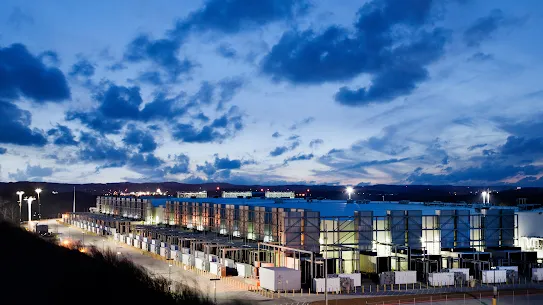
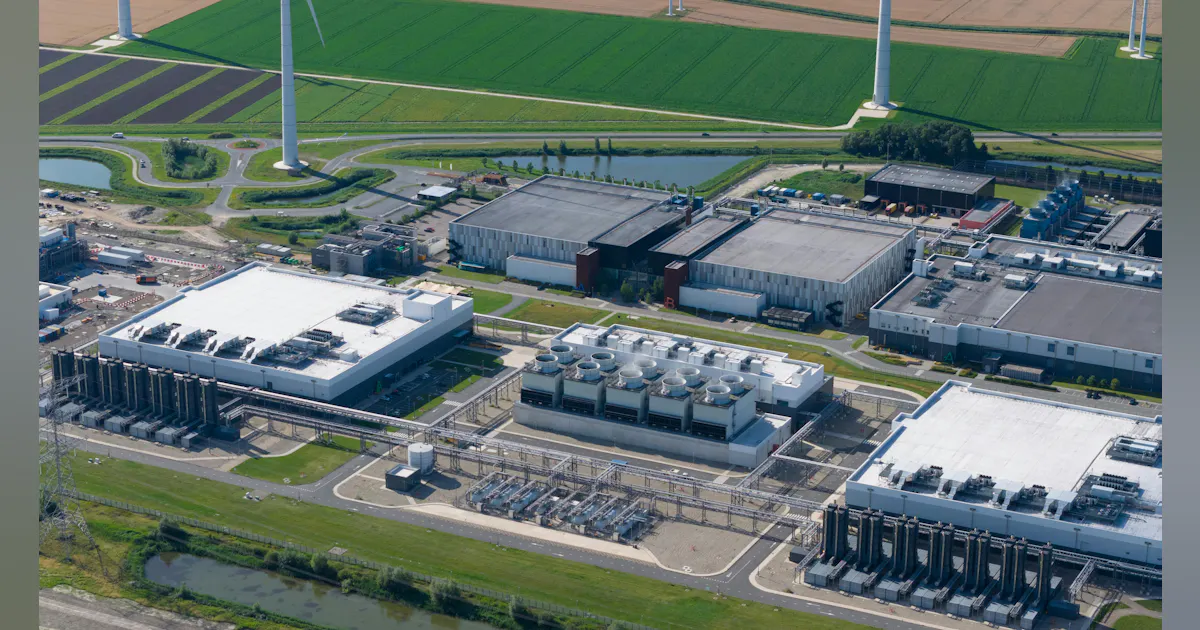
At its core, Project Louie is pitched as a hyperscale data center for cloud services, AI processing, and massive data storage—part of the tech industry's explosive growth. Spanning over 500 acres (with rumors of expansion to 900), it could consume 1,200 megawatts of electricity—enough to power nearly twice the households in Indianapolis—and up to 4 million gallons of water daily for cooling. Documents from AES Indiana, unearthed by the Citizens Action Coalition (CAC), reveal reliance on new natural gas plants, potentially spiking CO2 emissions by 68% without added renewables.
But speculation runs deeper: Could this be a node in a broader domestic surveillance apparatus? Google's history of government contracts, including with the NSA and CIA through programs like PRISM, raises eyebrows. Hyperscale centers like this could house servers for AI-driven monitoring of communications, location data, and online behavior—tools that have been used in past federal surveillance efforts. In a post-Snowden era, where tech firms collaborate on "national security" initiatives, Project Louie's rural location might offer low-profile storage for vast datasets on American citizens. While unconfirmed, the secrecy fuels theories that it's not just about ads and apps, but enabling real-time tracking under the guise of commercial tech.
Path to Approval: Rezoning Amid Resistance
Despite pushback, the project has cleared key hurdles:
- February 2025: Morgan County Commissioners rezoned 390 acres from agricultural to a planned unit development (PUD), covering land bounded by State Road 42, North Antioch Road, Keller Hill Road, and Union Church Road.
- September 29, 2025: The Plan Commission approved an additional 158 acres in a 5-2 vote, sending it to commissioners.
- October 6, 2025: Commissioners greenlit the extra land 2-1 (Don Adams and Bryan Collier for; Kenny Hale against), totaling 548 acres. The PUD mandates a 65-decibel noise cap at the property line and 150-foot berms (10-15 feet high) for screening.
Tax incentives are on the table but undisclosed. Construction might start soon, with operations eyed for 2027—if no further roadblocks emerge.
Rising Opposition: Voices and How to Join the Fight
Local residents have mobilized through town halls, petitions, and social media, decrying the loss of farmland, noise pollution, visual eyesores (up to 65-foot buildings), and resource drains with scant benefits like permanent jobs. Over 20 spoke at the October 6 vote, echoing prior hearings. Key figures include adjacent landowner Sean Walker, Carrie Syczylo, and Christopher Lamberson, who fear plummeting property values and eroded community character. Some have sued over the initial rezoning, with more legal threats looming.
The Citizens Action Coalition of Indiana (CAC) spearheads broader scrutiny, labeling the project "environmentally catastrophic." Program Director Ben Inskeep has been vocal on emissions and opacity. To get involved:
- CAC Contact: 1915 W. 18th Street, Suite C, Indianapolis, IN 46202; Phone: (317) 205-3535; Email: staff@citact.org or binskeep@citact.org (Ben Inskeep).
No single "Stop the Data Center" group exists, but grassroots efforts draw from successes like derailing Google's Indianapolis plan. Broader Indiana anti-data center networks in Boone County and elsewhere share tactics.
For official channels, contact local leaders:
- Monrovia Town Manager: Phone: (317) 996-6112; Email: townmanager@monrovia.in.gov.
- Martinsville Mayor Kenny Costin: Phone: (765) 342-2861; Address: 59 S. Jefferson Street, City Hall, Martinsville, IN 46151.
- Mooresville Clerk-Treasurer Dianna Wamsley: Phone: (317) 831-1608; Email: dwamsley@mooresville.in.gov; Address: 4 E. Harrison St., Mooresville, IN 46158.
- State Representatives for Morgan County:
- Peggy Mayfield (District 60, portions of Morgan County): Phone: (317) 232-9777; Email: h60@iga.in.gov.
- Craig Haggard (District 57, portions of Morgan County): Contact via Indiana House Republicans website or statehouse at (800) 382-9841.

Broader Impacts: Boom or Bust for Indiana?
Advocates tout economic "possibilities"—construction jobs, tax revenue, and growth. Yet critics argue it burdens utilities (possibly hiking rates) and infrastructure while offering little lasting value. Fitting Indiana's data center incentives like equipment tax breaks, Project Louie exemplifies the state's tech push. Fringe online claims tie it to FEMA or covert ops, but evidence is thin—though the surveillance angle merits watchful eyes.
As Monrovia fights to preserve its rural soul, Project Louie underscores the clash between big tech's ambitions and local autonomy. Will transparency prevail, or will the data deluge drown out dissent?
Comments
Post a Comment