Monrovia's 'Project Louie' may be another finger of the NSA's PRISM Project.
October 16, 2025
In 2013, Edward Snowden blew the whistle on the NSA's PRISM program, exposing how tech giants like Google handed over user data to the government. Fast forward to today, and the Midwest is ground zero for a data center explosion—facilities like the secretive "Project Louie" in Monrovia, Indiana, that could supercharge this surveillance machine. These sprawling server farms aren't just for streaming videos or cloud storage; they're the backbone of a system that collects, stores, and analyzes vast troves of personal data, often with government access baked in. As Indiana greenlights more of these behemoths, locals should ask: Are we building economic engines or Big Brother's warehouses?

The PRISM Program: A Crash Course in Mass Surveillance
PRISM, launched by the NSA in 2007, is a warrantless surveillance tool authorized under Section 702 of the FISA Amendments Act. It compels U.S. tech companies to provide communications data on non-Americans abroad, but inevitably sweeps up U.S. citizens' info too—emails, chats, videos, photos, and more. Snowden's leaks, published by The Guardian and The Washington Post, revealed a classified slide deck showing how the NSA taps into providers like Microsoft (joined 2007), Yahoo (2008), Google (2009), Facebook (2009), and others. One slide boasted that 98% of PRISM's data came from Yahoo, Google, and Microsoft alone.
Google's role was pivotal: Services like Gmail, Drive, YouTube, and search were fair game. The process? NSA analysts use "selectors" (e.g., email addresses) to request data via the FBI, which flows through tools like PRINTAURA for distribution and PINWALE for storage. While companies denied "direct access" to servers, insisting on legal compliance, leaks suggested a seamless pipeline. A companion program, MUSCULAR, even hacked unencrypted links between Google and Yahoo data centers overseas. Google responded by encrypting those links, but the damage to privacy trust was done.
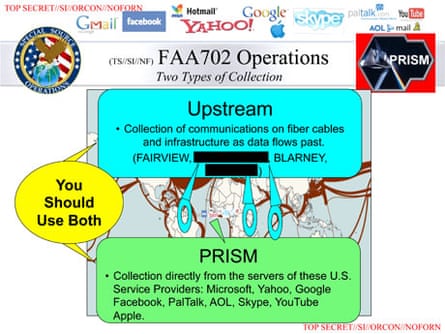
PRISM's defenders, including President Obama, called it a counterterrorism essential, claiming it thwarted over 50 threats. Critics, like the EFF and ACLU, slammed it for enabling "backdoor searches" of Americans' data without warrants, violating the Fourth Amendment. It's still active, reauthorized in 2024, with ongoing debates over reforms.
Data Centers: The Unsung Heroes (or Villains) of Surveillance
At the heart of PRISM and similar programs are data centers—massive facilities housing servers that store and process petabytes of information. The NSA's own Utah Data Center, a 1-million-square-foot behemoth, exemplifies this: Built for $1.5 billion, it's designed to hold yottabytes of data from PRISM and other sources, enabling real-time analysis and long-term storage. Private data centers, like those run by Google, feed this ecosystem by collecting user data that's then accessible via FISA orders. Infiltration tactics, as in MUSCULAR, show how the NSA bypasses companies to siphon data directly from inter-center links.
These centers aren't remote fortresses; they're integrated into global networks. Countries hosting them gain leverage over data flows, influencing surveillance decisions. For the NSA, they transform raw intercepts into actionable intelligence, powering everything from drone strikes to domestic monitoring.
The Midwestern Connection: From Farmland to Surveillance Hubs
The Midwest is booming with data centers, drawn by cheap land, power incentives, and central location. States like Indiana, Illinois, and Ohio offer tax breaks and regulatory ease, luring giants like Google and Meta. But this growth ties into surveillance: AI-driven data centers enable advanced monitoring, from policing to national security contracts. Google's Midwest facilities, for instance, could store data subject to PRISM requests, given the company's history.
Enter Project Louie: This proposed 548-acre hyperscale center in Monrovia, likely Google's, demands 1,200 MW of power—enough to rival major cities—and millions of gallons of water daily. While pitched for AI and cloud computing, its scale suggests potential for surveillance storage. In a PRISM-like setup, it could house servers processing location data, communications, and behavioral profiles, accessible to the NSA. Midwest centers' isolation might even appeal for low-profile ops, echoing the Utah facility's role in expanding PRISM's reach.

Government contracts amplify this: Tech firms secure deals for data services, blurring lines between commercial and spy ops. With AI integration, these centers could automate surveillance, analyzing patterns in real-time—think facial recognition or predictive policing in Midwest cities.
Why It Matters for Indiana
As data centers proliferate, so do risks: Higher utility bills, environmental strain, and eroded privacy. Project Louie's secrecy—NDAs hiding the developer—mirrors PRISM's opacity. If it's Google, expect ties to government data demands. Hoosiers, it's time to demand transparency before our heartland becomes a surveillance silo.
Comments
Post a Comment